







You’ve been off the shot for a few weeks when little things start feeling… off.
The scale has crept up. Your jeans feel tighter. And suddenly, you’re much hungrier than you were before.
Any one of those is easy enough to brush off as bloat or period-related.
But together…they could be tell-tale signs of Ozempic rebound.
The reason the weight starts creeping back may be hiding in the fat cells you worked so hard to shrink.
What Is Fat Cell Memory?

Fat Cell Memory is the reason why the weight you dropped on GLP-1 comes back harder and faster.
Yes, the shot may have helped you eat less and emptied out those fat cells, but the cells themselves never actually go away.
Fat Cells Shrink but Don't Disappear
Most of us assume that losing fat means losing fat cells. It doesn't.
Picture a warehouse full of balloons. Losing weight doesn't knock the warehouse down, it empties all those balloons full of fat.
Now empty, the balloons flatten and take up far less room.
But every one of them is still there, ready to be filled up again. That’s just human biology.
Why Fat Cells “Remember”
The same balloons have already spent months or years stretched bigger.
When you gained weight, your fat cells expanded to store the extra energy. When you lost weight, they emptied out and shrank again.
But shrinking them doesn't make them brand new. They "remember" just how big they need to expand to accommodate the fat.
That's what researchers found when they published in Nature in 2024¹:
- In people who had lost significant weight, researchers found their fat cells were still behaving like they had at the higher weight.
- In mice, that leftover change made weight regain happen faster once they were back on a high-fat diet.
Simply put: the fat cell gets smaller, but it remembers being big.
So when fat starts coming back, it fills up faster than before.
Why Appetite Signals Don't Bounce Back

Fat cells are just half of the story.
The other half: Your body is actually capable of making its own GLP-1:
- When your gut bacteria ferment fiber from the food and drinks you take
- They produce compounds that feed into natural GLP-1 and other appetite signals.
Months of eating less starve these bacteria, and the GLP-1 and appetite signals they produce get weaker.
This is what we call Gut Bacterial Burnout, the other half of the story. There's more on how probiotics and natural GLP-1 production connect.
So you come off the shot with both halves working against you:
- Fat cells that have done this before, ready to refill
- Appetite signals still running at half strength
…creating the perfect storm for Ozempic rebound.
And it moves fast. A 2026 review in The BMJ found that weight returned almost 4x faster after stopping weight-management medication².
How Can You Keep Fat Cell Memory Quiet?

Like it or not, your fat cells are here to stay.
But what you can change is how full they get. The shot had been quieting hunger and steadying blood sugar and cravings, and now that work falls back to you.
That means:
-
Protein and fiber at every meal. They do the fullness work the shot was doing for you.
-
Movement you'll actually keep up. It helps you hold onto muscle while your weight stays steady.
-
Sleep. Short nights make hunger and cravings louder the next day.
- Improving your gut health. It's what your own appetite signals run on.
That last one is the hardest to pull on your own. Those bacteria need serious help to bounce back, at a time where appetite is still low and food volume is still down.
That's where a daily probiotic can do some of the work for you, and it's better to start while you’re ahead to keep your results.
How Provitalean™ Helps

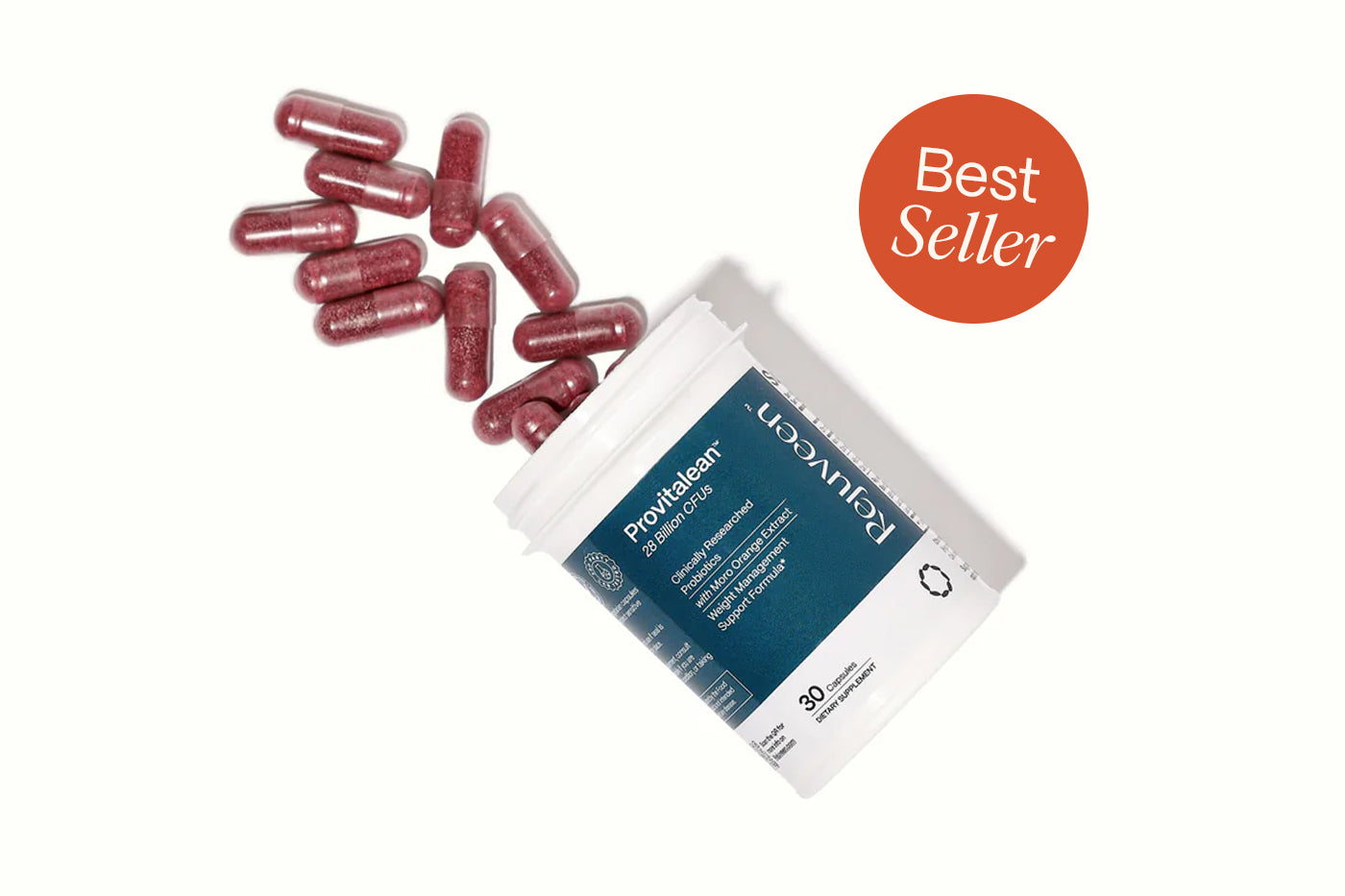
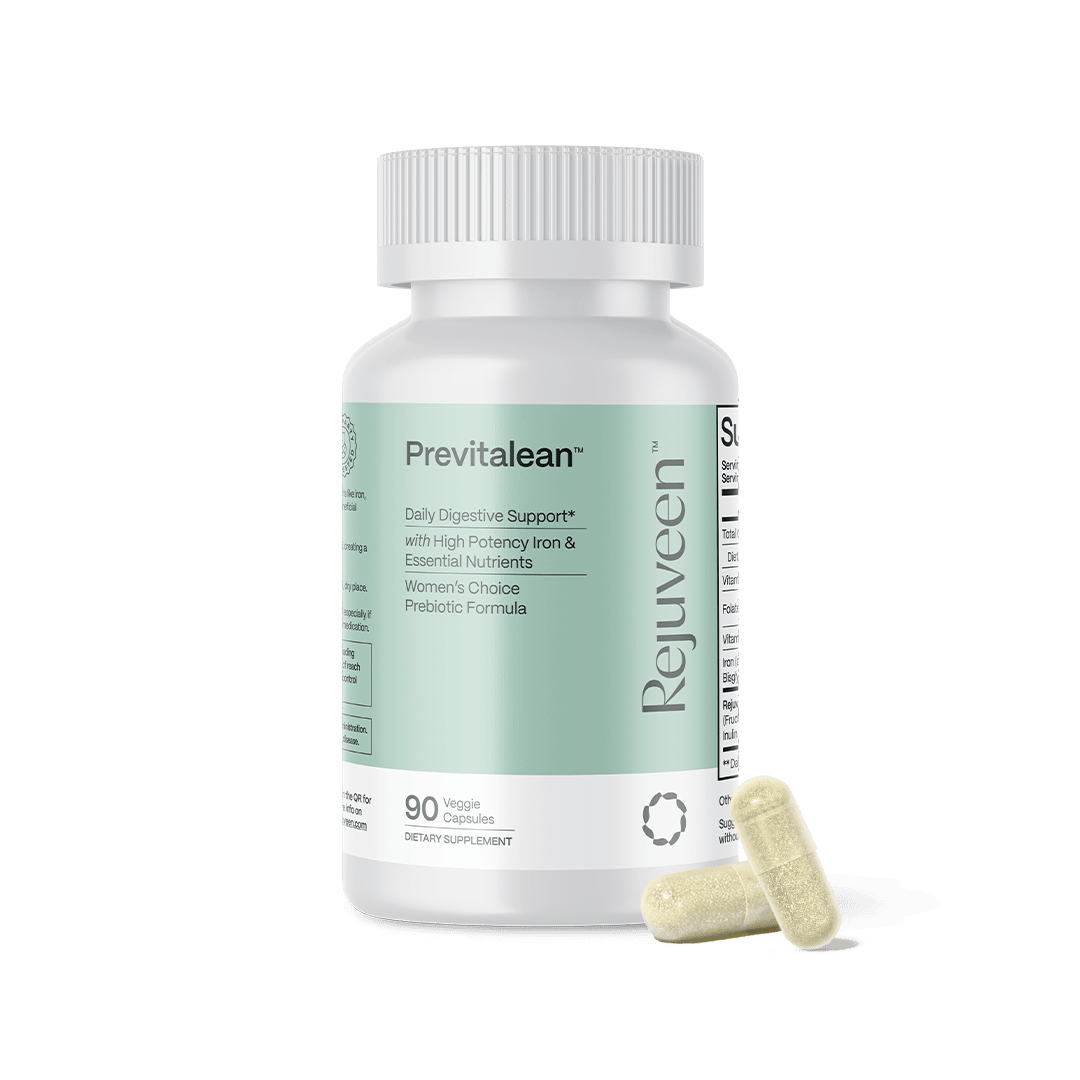
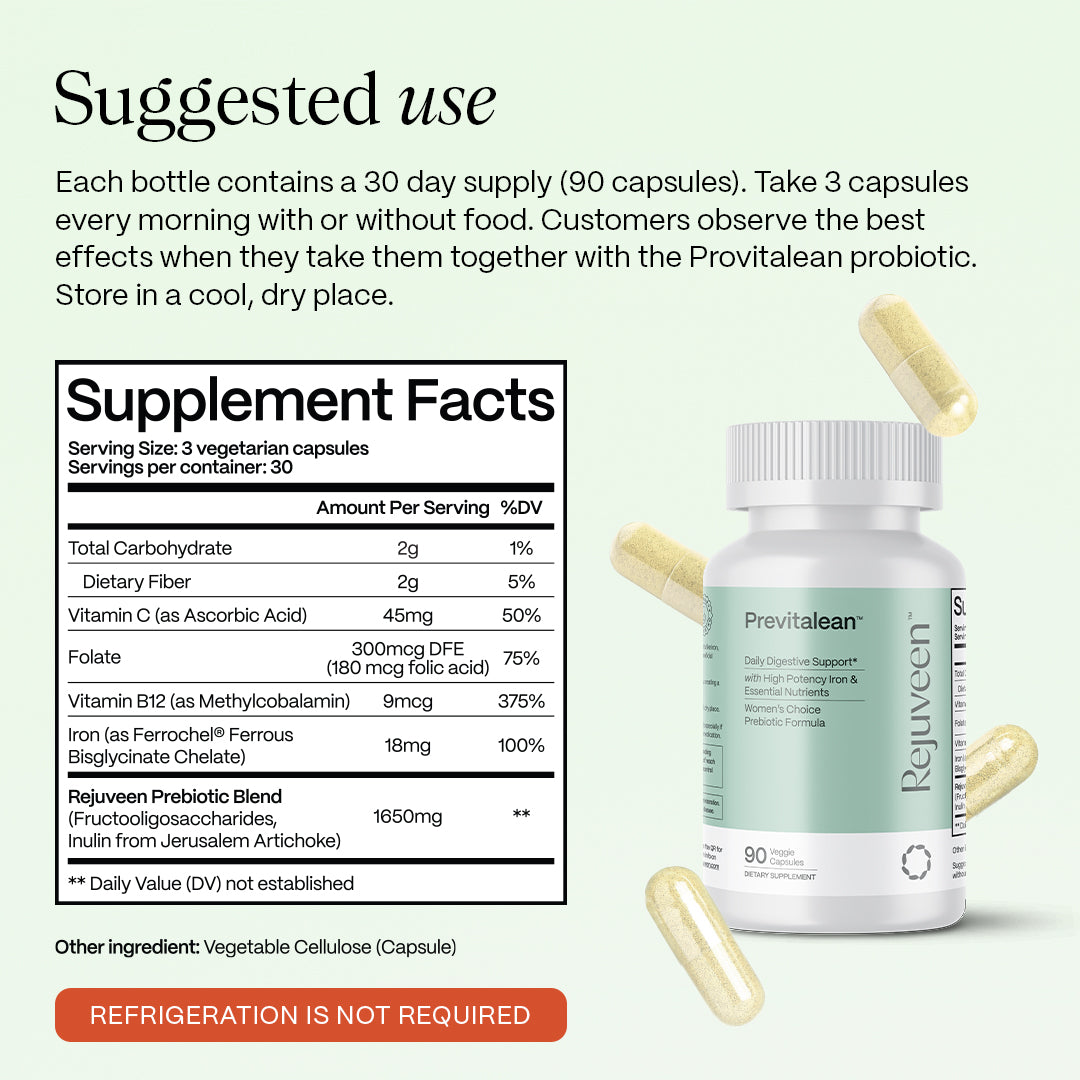
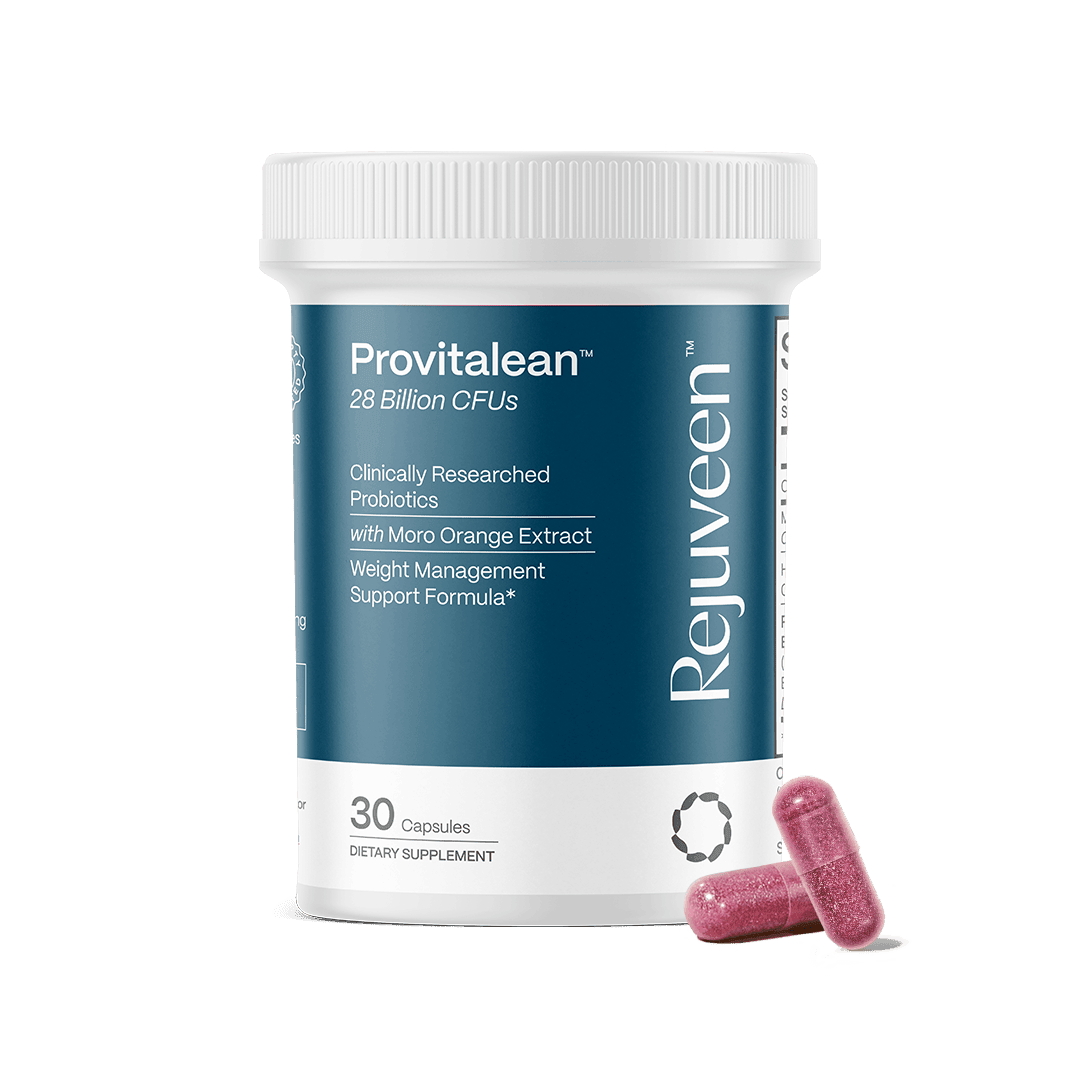
Provitalean is a daily probiotic perfect for just that: putting back the bacteria that’s responsible for those appetite signals and ensuring that they thrive.
It contains B. lactis B420, a probiotic strain studied for its effect on appetite. In a six-month randomized trial³, subjects on B420 ate 11 to 15% fewer calories a day than placebo. Their waist measurements came down with it.
Remember when we said your gut produces its own GLP-1?
Yeah, B420 may help your gut produce MORE of it as well.
The same trial found that B420 raised the amount of Akkermansia muciniphila⁴, a bacterium that prompts your gut to put out GLP-1⁵, the same hormone in the shots.
What’s Inside Provitalean
-
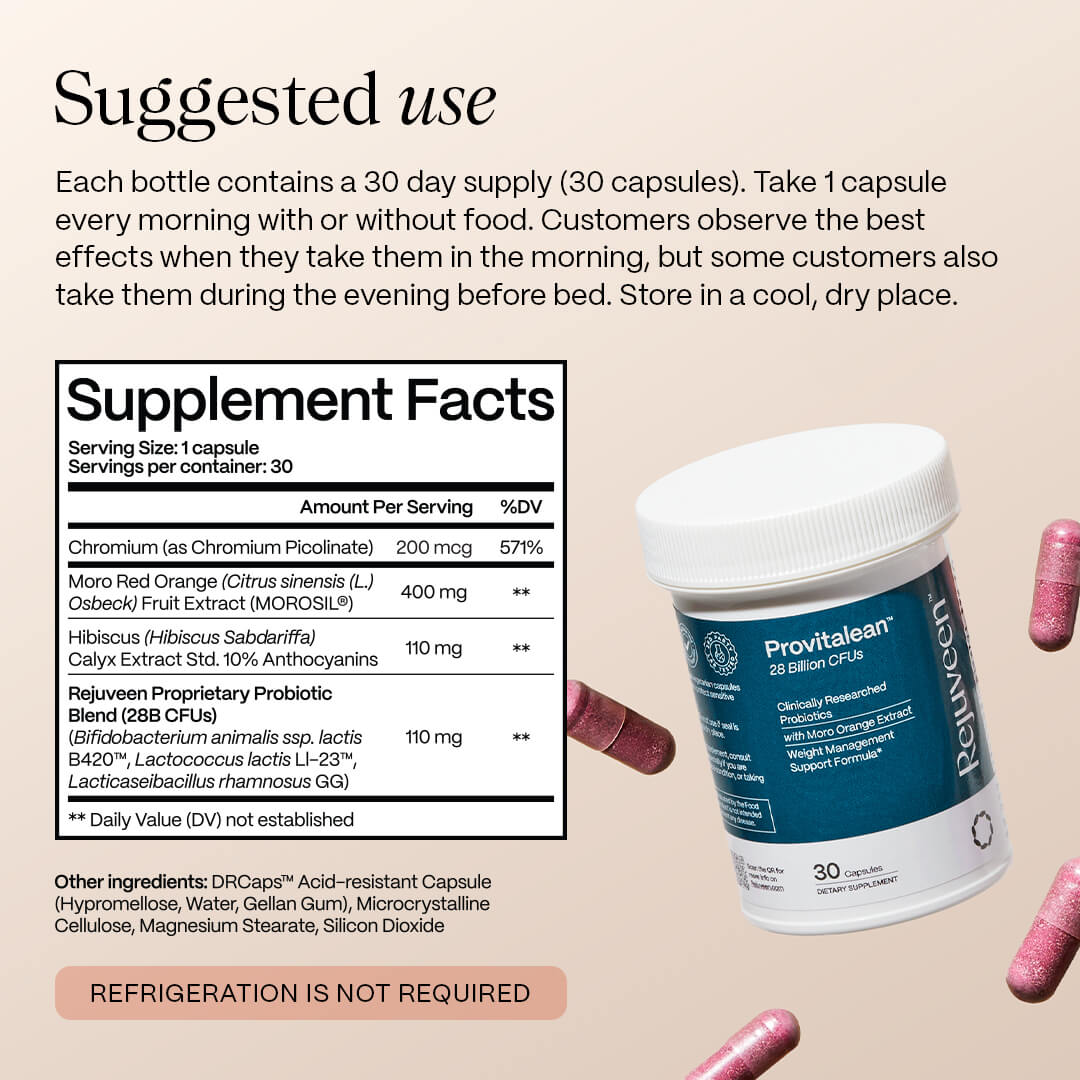
Rejuveen Proprietary Probiotic Blend, 28 billion CFUs. Bifidobacterium animalis ssp. lactis B420, Lactococcus lactis LI-23 and Lacticaseibacillus rhamnosus GG. These are the populations that thin out while you're eating less, including that B420 probiotic.
-
Moro red orange extract (MOROSIL), 400 mg. A blood orange extract studied for its role in fat metabolism and body composition. Click here to read more about Moro orange extract.
-
Hibiscus calyx extract, 110 mg. Standardized to 10% anthocyanins. May help inhibit fat absorption, supporting your weight management.
-
Chromium (as chromium picolinate), 200 mcg. The same blood sugar steadiness the shot had been handling for you.

How Long Before You Notice Anything?
Like all supplements, we can’t promise a fixed timeline.
First, most probiotic research measures results over weeks or months, with their subjects following strict diets and caloric restrictions.
Secondly, your gut won't respond exactly like someone else's. The strains you're taking, what you're eating, and how consistently you take them all matter.
So how do you know it's heading the right way?
These are the 3 major shifts that happen before the scale does:
-
Food noise fades. You're thinking about food less often during the day.
-
Portions start landing. The amount that left you hungry last month feels like enough.
- Cravings get easier to pass on, especially in the evening.

Final Words on Fat Cell Memory
To sum up our article: two things change when the shot stops.
- Your fat cells are still there, primed to refill.
- The bacteria behind your own fullness signals are running thin after months of eating less.
That's Fat Cell Memory and Gut Bacterial Burnout, and together they're why the weight can come back faster than it came off.
You can't get rid of fat cells. What you can do is keep them from filling, and rebuild the gut side while your results are still holding.
You can learn more about Fat Cell Memory and the maintenance approach behind it.
Frequently Asked Questions
What is Fat Cell Memory?
Fat Cell Memory is why the weight you lost on the shot can come back faster than it came off, even when your habits haven't really changed. Losing weight empties your fat cells, but it doesn't remove them, and they don't go back to behaving like cells that were never large.
Do fat cells have memory?
Not the way you remember things. Think of a balloon you've already blown up once. It shrinks back down, but the rubber has been stretched, so it inflates more easily next time. Research in Nature found fat cells behave in a similar way after major weight loss¹.
What is Gut Bacterial Burnout?
Your gut bacteria ferment fiber into compounds that feed your natural GLP-1 and other appetite signals. Months of eating much less starves those bacteria, so the signals they support get weaker. That's Gut Bacterial Burnout, and it's the other half of why Ozempic rebound hits so fast.
Does Ozempic cause Fat Cell Memory?
No. It comes from changes in fat tissue that follow weight gain and weight loss, whatever caused them. Ozempic helps those cells empty by making it easier to eat less, but the cells themselves stay.
What happens when you stop taking Ozempic?
Gaining weight back after Ozempic usually starts with appetite. Food noise returns, portions stop feeling like enough, and your own fullness signals are still running at half strength. Meanwhile the fat cells you emptied are intact and ready to refill.
Will I gain weight back after stopping Ozempic?
Not necessarily, but it's common. A 2026 review in The BMJ found weight returned almost 4x faster after stopping weight-management medication². How much comes back varies from person to person, and what you do during the taper matters.
Does Fat Cell Memory apply to Wegovy, Mounjaro and Zepbound too?
Yes. The same fat-tissue changes follow weight gain and weight loss regardless of which GLP-1 medication was used. Wegovy and Ozempic contain semaglutide, while Mounjaro and Zepbound contain Tirzepatide.
Can you prevent Ozempic rebound?
There aren't any guarantees, but you can get ahead of it. Protein and fiber at every meal, movement you'll keep up, decent sleep, and support for the gut bacteria behind your own appetite signals all make the transition easier. Starting while your results are still intact gives you more room than starting after.
References
- Hinte, L.C., et al. Nature, 2024. https://www.nature.com/articles/s41586-024-08165-7
- West, S., et al. The BMJ, 2026. https://www.bmj.com/content/392/bmj-2025-085304
- Stenman, L.K., et al. EBioMedicine, 2016. https://www.sciencedirect.com/science/article/pii/S2352396416304972
- Hibberd, A.A., et al. Beneficial Microbes, 2019;10(2):121-135. https://doi.org/10.3920/BM2018.0028
- Yoon, H.S., et al. Nature Microbiology, 2021. https://www.nature.com/articles/s41564-021-00880-5
These statements have not been evaluated by the Food and Drug Administration. This product is not intended to diagnose, treat, cure or prevent any disease.